
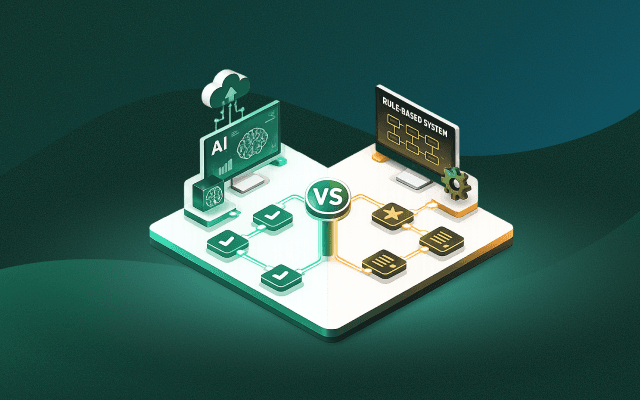
Reconciliation used to be cleanup work. Transactions settled, files arrived, teams matched what they could and escalated what they couldn't. The process sat at the back of the financial close, tolerated as a necessary friction. That model is now structurally inadequate.
Finance teams are now reconciling transactions across payment gateways, banks, ERPs, processors, and real-time settlement systems simultaneously. Instant payment rails like RTP and FedNow support always-on settlement with per-transaction values up to $10 million. ISO 20022 has moved from transition target to global operating standard, embedding structured remittance data directly into payment flows rather than reconciling it separately downstream. Settlement cycles that once ran overnight now close in seconds. The exception is no longer an end-of-day event, it surfaces in real time, and the systems built to catch it need to operate at the same speed.
The consequence for finance teams is a fundamental shift in how reconciliation software is evaluated. Rule-based systems, long the enterprise default, were designed for batch environments with predictable data. AI-powered systems are now moving from controlled pilots into Finance teams are now reconciling transactions across payment gateways, banks, ERPs, processors, and real-time settlement systems simultaneously. Instant payment rails like RTP and FedNow support always-on settlement with per-transaction values up to $10 million. ISO 20022 has moved from transition target to global operating standard, embedding structured remittance data directly into payment flows rather than reconciling it separately downstream. Settlement cycles that once ran overnight now close in seconds. The exception is no longer an end-of-day event, it surfaces in real time, and the systems built to catch it need to operate at the same speed.
Production, promising adaptive matching across the inconsistent, high-volume, multi-source environments that modern payment infrastructure generates. Both have a legitimate role. The decision finance leaders are facing is not which to adopt, but how to deploy each correctly and where one approach reaches its operational ceiling.
What is Rule-Based Reconciliation Software and How Does it Work
Rule-based reconciliation matches transactions using predefined logic: amount, date, reference ID, or currency fields must satisfy conditions configured in advance. When inputs are consistent and predictable, such as ACH batch settlements or fixed-fee billing cycles, these systems perform reliably with near-perfect accuracy on clean data.
Every matched transaction traces to a specific rule, which simplifies internal controls documentation and satisfies external audit requirements without interpretive ambiguity.
The structural limitation is maintenance. When a processor changes its settlement file format, or a new banking partner structures reference fields differently, rules need rewriting. In organizations with multiple processors and banks, that burden scales with complexity and typically sits in an IT queue rather than finance's hands.
What is AI-Powered Reconciliation Software and How Does it Work
AI-powered reconciliation uses machine learning to match transactions based on patterns and probabilities rather than fixed conditions. The system learns from historical match data, assigns confidence scores to candidate pairs, and auto-approves or escalates based on configurable thresholds.
This matters most in environments with real-world data inconsistencies: partial payments where settlement amounts differ from invoice values, timing gaps where bank postings lag processor reporting, or reference ID truncation across systems. Static rules cannot resolve these reliably at volume. AI can, and its accuracy on complex exception types improves over time as it processes more transactions and incorporates corrections from finance teams. Modern AI reconciliation also extends into anomaly detection on fee structures, identification of duplicate settlements, and pattern-based flagging of missing transactions.
How Do AI and Rule-Based Systems Compare in Accuracy and Match Rates
Rule-based systems achieve high accuracy on structured data, often above 95% auto-match for straightforward transaction types. The gap shows in the residual: the 5 to 15% of transactions involving timing differences, amount variances, or non-standard field values that static logic routes directly to exception queues.
AI systems are built for that residual. Production deployments in high-volume payment environments report straight-through reconciliation rates up to 80% across all transaction types. Reducing unmatched transactions from 12% to 3% does not just improve accuracy, it structurally reduces the manual effort required to close the books each period.
How Do Both Approaches Handle Scale and Transaction Complexity
Rule-based systems scale transaction volume effectively. The problem is dimensional: as data sources, formats, and transaction types multiply, the rule set required to maintain coverage grows nonlinearly. At a certain complexity threshold, rule maintenance becomes its own operational risk.
AI systems adapt to new patterns without manual updates. When a new payment rail goes live or a processor modifies its settlement structure, the model adjusts from new data rather than waiting for an IT change request. This makes AI better suited to high-variability environments, such as businesses operating across multiple geographies, acquiring relationships, and currencies simultaneously. Organizations processing transactions across five processors and three ERPs face a complexity problem that volume metrics do not capture.
What Role Does Explainability and Auditability Play in System Selection
Auditability has historically been the primary objection to AI in financial reconciliation. When a match decision cannot be traced to a specific rule, internal controls teams and external auditors face an interpretability gap that introduces compliance risk under SOX, PCI-DSS, and broader financial compliance frameworks.
Modern AI reconciliation platforms address this through explainability tooling: confidence scores attached to each match, traceable logic showing which data fields drove the decision, and immutable audit logs covering every auto-approved and manually reviewed transaction. This satisfies audit requirements in most regulated environments when governance thresholds for auto-approval versus human review are properly defined.
Explainability is now a baseline expectation. Finance leaders should evaluate any AI reconciliation platform on whether it can answer an auditor's question with sufficient evidence, not just whether it can match transactions at scale.
Can AI and Rule-Based Reconciliation Work Together Effectively
Yes, and most enterprise-grade platforms are built this way. Rule-based logic handles predictable, high-confidence volume: transactions where amount, date, and reference align cleanly. AI is layered on top to resolve the exception pool that static rules cannot address before escalating to human review.
Deterministic matching provides a transparent baseline that compliance teams can audit straightforwardly. AI handles edge cases within defined governance boundaries. Neither approach is asked to do what it does poorly.
When Should Finance Teams Use Rule-Based Systems vs AI-Powered Reconciliation
Rule-based systems suit organizations with low transaction volumes, standardized data formats, and limited source system diversity. When settlement data arrives consistently from a small number of counterparties and exceptions are rare, a rule-based system is operationally sufficient.
AI-powered reconciliation is the stronger choice when volume is high, data sources are multiple and inconsistent, or the business is scaling. The most common inflection point is growth: a business that managed reconciliation adequately with rule-based logic at lower volumes often finds that same system generating unmanageable exception queues. This typically happens as transaction sources and settlement patterns diversify faster than static reconciliation logic can adapt.
How Optimus Fintech Combines AI and Rule-Based Intelligence for Scalable Reconciliation
Optimus Fintech integrates deterministic rule-based matching with AI-driven intelligence in a unified platform, treating both as complementary layers. Multi-source ingestion unifies data from payment gateways, processors, banks, and ERP systems into a single normalized view before matching begins, eliminating the format inconsistency that inflates exception rates in rule-only environments.
The no-code workflow builder lets finance teams configure reconciliation logic without IT involvement, removing the sprint-cycle bottleneck that delays rule maintenance in most organizations. AI-powered anomaly detection flags fee discrepancies against contracted rates and identifies duplicate settlements in real time. Real-time dashboards, audit-ready reporting, and automated audit trails give CFOs operational visibility without separate reporting builds, and CTOs the infrastructure monitoring needed to maintain performance at scale.
Key Takeaway
Both AI-powered and rule-based reconciliation have important roles in modern finance operations. The decision is not about selecting one and eliminating the other. It is about deploying each where it performs, combining them in a governance structure that supports auditability, and building a system that adapts as transaction complexity grows.
Finance teams that treat this as binary tend to either over-invest in rule maintenance or adopt AI without the controls that regulated environments require. Intelligent, hybrid reconciliation approaches enable accuracy, scalability, and operational efficiency simultaneously. The organizations building that infrastructure now will close faster, with fewer exceptions and greater confidence in their financial reporting.
See how Optimus Fintech closes the gap between financial accuracy and infrastructure scale.
FAQs
At what point does AI-powered reconciliation become operationally justified over a rule-based system?
When exception rates exceed 8 to 10% on a sustained basis, or rule maintenance requires more than one FTE-equivalent per quarter, the cost of managing static logic typically exceeds the cost of deploying adaptive matching.
How do AI reconciliation systems distinguish between duplicate transaction amounts from different processors within the same settlement window?
AI engines match across multiple fields simultaneously, including reference IDs, timestamps, and originating entity identifiers, rather than amount alone. This prevents the false-positive matches that single-field rule logic routinely generates in multi-processor environments.
What governance controls prevent AI matching decisions from creating audit exposure in SOX-regulated environments?
Enterprise AI reconciliation platforms maintain immutable logs of every match decision, including confidence scores and contributing data fields. These satisfy SOX documentation requirements when auto-approval thresholds are formally defined in the control framework.
Can existing rule-based configurations be migrated into a hybrid AI platform without rebuilding logic from scratch?
In most enterprise implementations, existing rule sets are imported and run in parallel with AI matching during an initial validation period. This lets finance teams verify AI performance against known outcomes before transitioning exception handling to the adaptive layer.