Data Fusion Agent
AI that understands financial data - not just data structures.
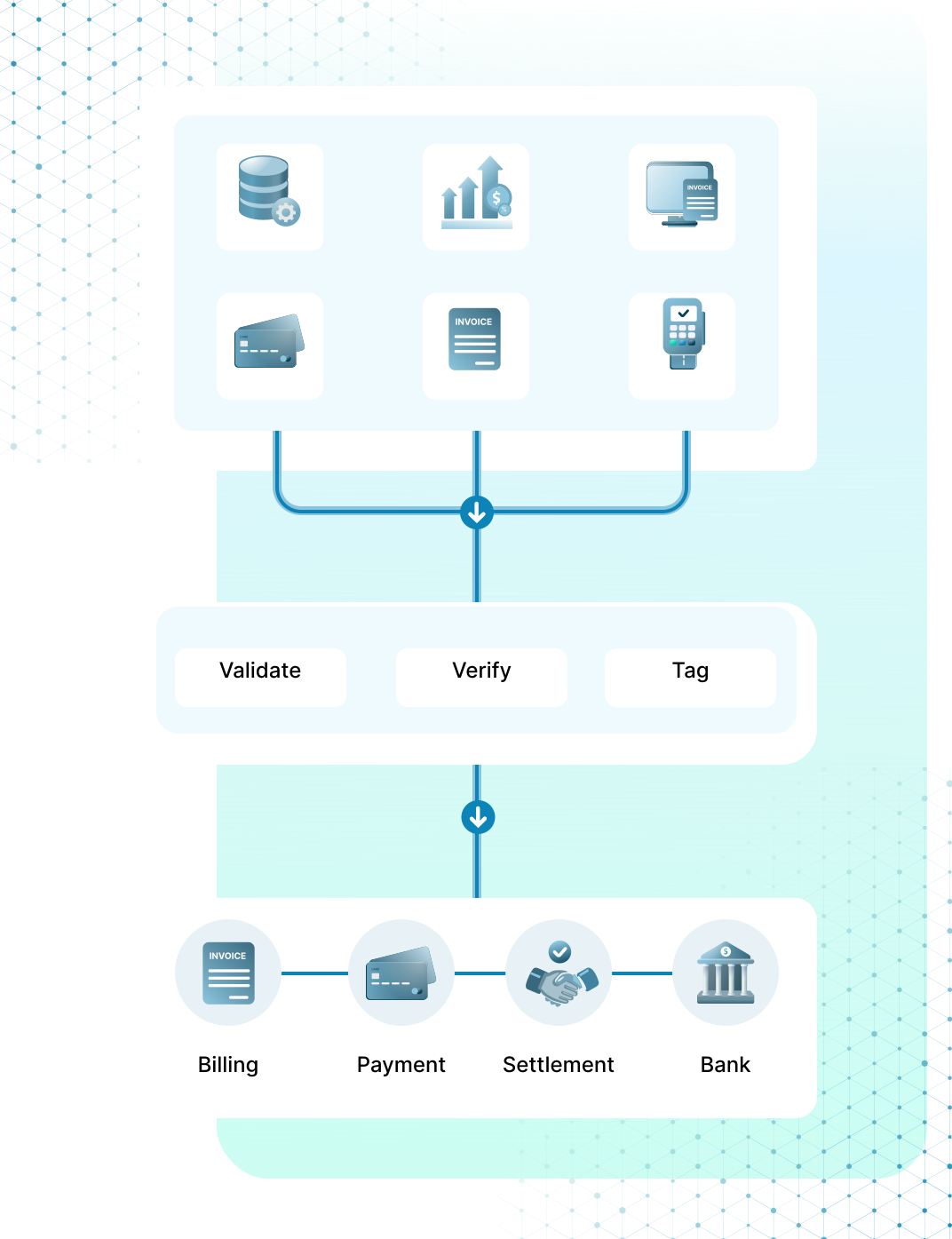
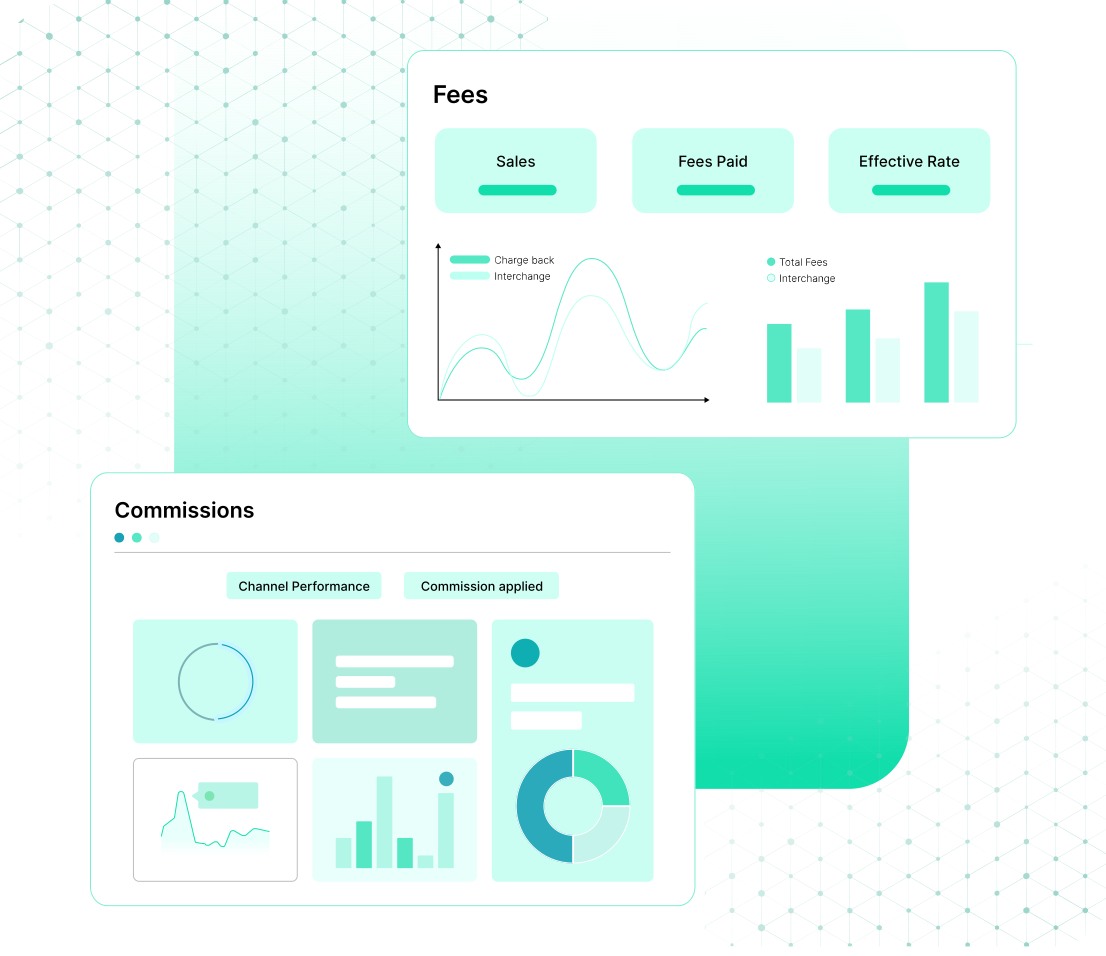
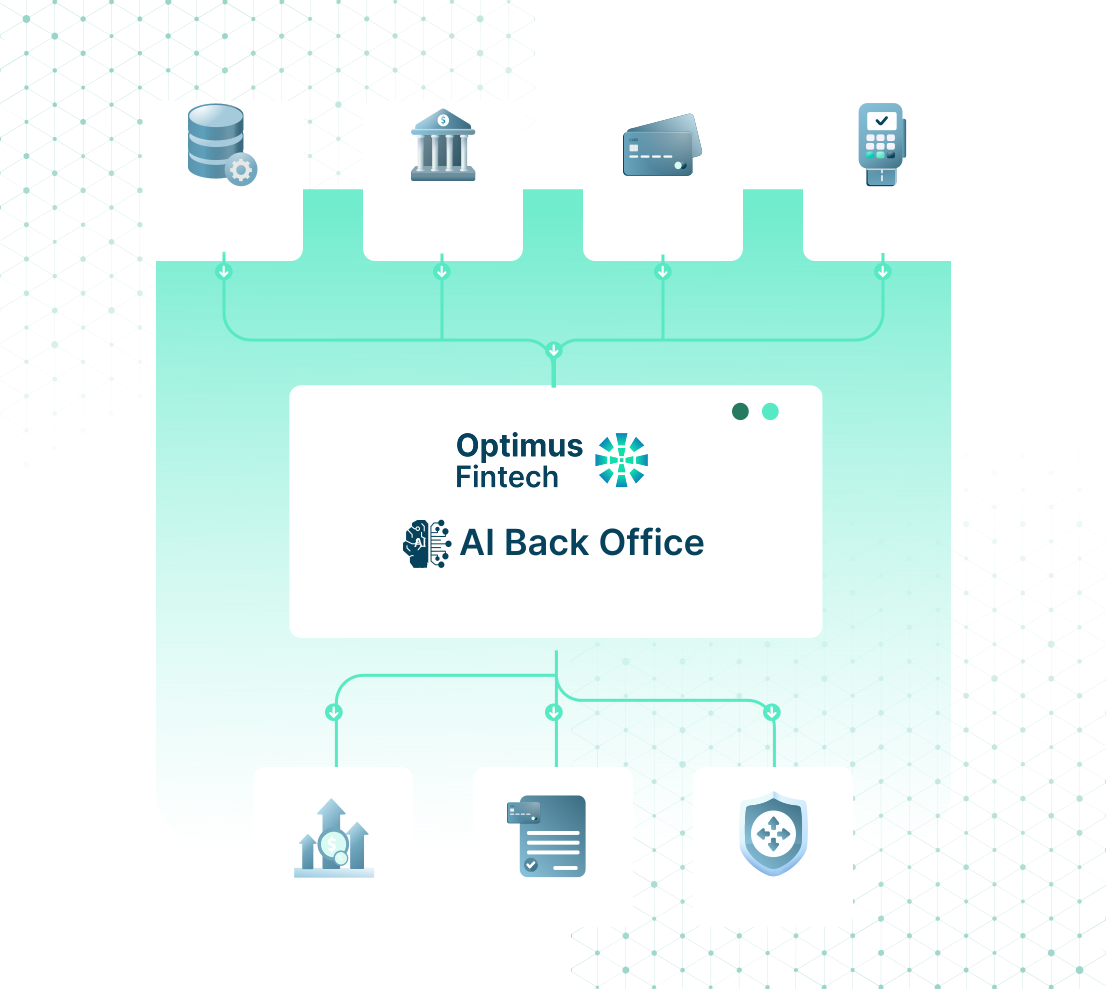
Data Fusion Agent connects ERP, bank, processor, POS, ecommerce, marketplace and billing data. It discovers schemas, identifies equivalent financial concepts, creates relationships across systems and transforms them into a standardized financial model.




Effortless Data Validation
Seamlessly validate and transform your disparate operational data with our Data Fusion Agent.
Fast Workflow Creation
Enable teams to architect custom business workflows with an intuitive Drag and Drop UI in a matter of clicks.
Maintain Data Integrity
Securely store your financial data in a PCI-DSS certified cloud data mart

Pre-built Integrations
Instantly connect with all your financial data sources using Optimus’ 150+ pre-built integrations to power faster GTM.

Intuitive Drag and Drop
Visually map operational data flow in minutes to process, map, & orchestrate data throughout the order-to-cash cycle.

Flexible Data Ingestion
Ingest multiple files across multiple formats and Optimus will normalize complex data sets and files with just a few clicks.

Strong Data Governance
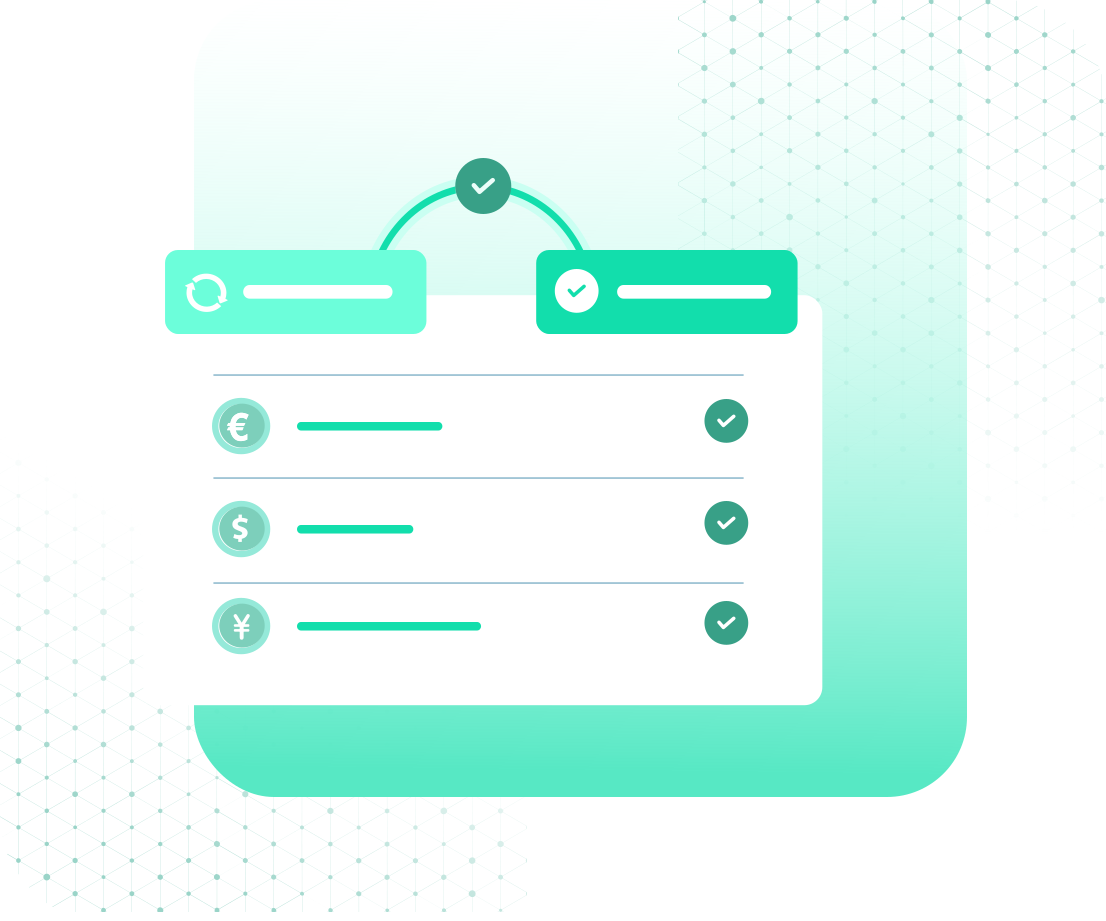
Validate each record and detect errors and omissions at source, so you’re not constantly fixing issues downstream.

Data Security
Ensure the highest levels of data security with your operational data stored in a PCI DSS certified cloud environment.

OTA Updates
Stay ahead with the latest regulatory and compliance implementations through automated system updates for data governance and operational transparency.
Select Data Source
Simply select from 150+ pre-built connectors or create your custom source with a few clicks.
Enrich Data Source
Effortlessly enrich and contextualize your data with just a few clicks, eliminating the need for complex coding.

Connect Data Source
Create N-way business flows with our interactive Drag and Drop UI to simply connect sources for automated data reconciliation.

Frequently Asked Questions For Data Preparation
What is data preparation reconciliation and why is it important?
Data preparation reconciliation is the process of organizing, cleaning, and validating data to ensure accuracy and consistency before analysis or reporting. It involves comparing datasets to identify and correct discrepancies. This step is crucial for maintaining data integrity, reducing errors, and enabling reliable decision-making based on accurate and consistent information across systems or reports.
What are the key steps involved in data preparation reconciliation?
The key steps in data preparation reconciliation include gathering and consolidating data from various sources, cleaning and transforming it to ensure consistency, and identifying discrepancies. The process continues with validating data accuracy through comparison against reference datasets and correcting errors. Finally, the data is formatted for further analysis or reporting, ensuring it's ready for use.
How does data preparation reconciliation ensure data accuracy?
Data preparation reconciliation ensures data accuracy by identifying and correcting discrepancies between data sources. It involves comparing datasets, validating their consistency, and resolving mismatches. Automated tools can streamline this process by detecting errors such as missing or duplicate entries, enhancing data integrity. This ensures that the data used for analysis or reporting is accurate, complete, and reliable.
What is data reconciliation in finance?
Data reconciliation in finance involves comparing and aligning data from different sources to ensure accuracy and consistency. It typically includes verifying transactions, balancing accounts, and resolving discrepancies between financial records. This process helps identify errors, prevent fraud, and ensure that financial statements reflect a true and fair view of an organization's financial status.
How to reconcile data sets?
To reconcile data sets, first, identify and align common fields across sets. Next, validate and clean the data to ensure consistency and accuracy. Compare data entries to find discrepancies or mismatches. Resolve any differences by investigating the source of errors. Finally, document and update the reconciled data for accurate and complete records.
What is data management reconciliation?
Data management reconciliation involves comparing and aligning data from different sources to ensure accuracy and consistency. It identifies discrepancies, corrects errors, and ensures that records match across systems. This process is crucial for maintaining data integrity, supporting decision-making, and ensuring compliance with regulatory requirements by verifying that all data is accurate and up-to-date.
Is Data Preparation Software Suitable for Real-Time Data Processing?
Yes, Optimus' data preparation software supports real‑time reconciliation and real-time data processing, allowing for immediate data transformation and integration as data is generated, ensuring that insights are based on the most current information.
Can I Customize Data Preparation Workflows?
Yes, Optimus' data preparation software supports real-time data processing, allowing for immediate data transformation and integration as data is generated, ensuring that insights are based on the most current information.
What Are the Key Benefits of Automating Data Preparation?
Automating data preparation reduces manual effort, minimizes errors, increases efficiency, speeds up data processing, and allows for more consistent and reliable data preparation compared to manual methods.
How Does Data Preparation Software Facilitate Data Integration?
Optimus' data preparation software facilitates data integration by providing tools to connect, merge, and synchronize data from diverse sources, ensuring that all relevant data is consolidated and ready for analysis.
What Support Options Are Available in Optimus Data Preparation Software?
Optimus offers a range of support options, including technical support, user training, and documentation, to assist you with any issues or questions related to data preparation and software.

You can reach us at:

1700 Montgomery St, San Francisco, California 94111
6470 E Johns Crossing Suite 160, Johns Creek, GA 30097
Copyright © 2026 Optimus. All Rights Reserved.

