
Request Demo
  1. 100% Eradication of Transaction Leakages.
  2. 95% Faster Entry to Market.
  3. 90% Enhancement in Back Office Operations.

Payment Reconciliation

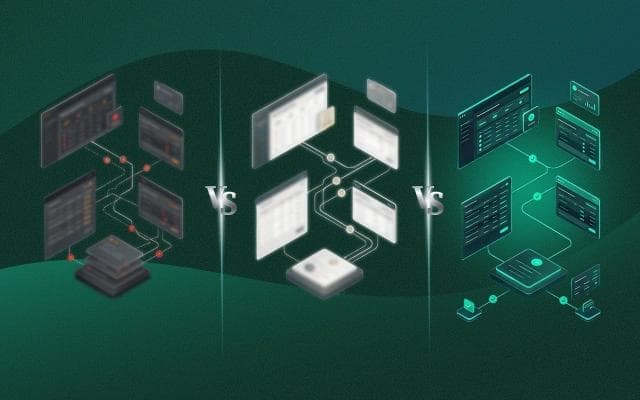
Optimus vs. Ledge vs. BlackLine: Payment Reconciliation for Fintechs and Marketplaces | A Practical Comparison

Optimus vs. Ledge vs. BlackLine: Payment Reconciliation for Fintechs and Marketplaces | A Practical Comparison

hello
Amrit Mohanty

May 20, 2026

Blog Image

Most reconciliation tools were designed for the general ledger (GL) layer. They match bank statements to ledger entries, certify balance sheet accounts, and generate audit trails. That works well when the reconciliation problem is accounting-shaped.

For fintechs and marketplaces, the problem is payment-shaped. Money moves across multiple PSPs with different file formats and settlement windows. Sub-merchants need individual-level payout reconciliation. Chargebacks run through a multi-stage lifecycle spanning weeks. Fees arrive in separate files and need validating at the transaction level before you know whether you were charged correctly.

Three platforms consistently come up during fintech and marketplace reconciliation evaluations. Fintech and marketplace reconciliation evaluations keep narrowing to three platform categories. Legacy financial close tools centre on GL governance, account certification, and SOX compliance. AI-native close platforms bring automation to ERP-based close workflows, but their reconciliation logic is still accounting-first. Optimus is a payment-native reconciliation platform built for the payment operations layer: N-way matching, transaction-level fee validation, ML-powered chargeback management, and sub-merchant reconciliation at scale.

This comparison evaluates all three against the reconciliation challenges that fintech and marketplace finance teams face every day.

The Short Answer

If your reconciliation problem stops at the GL, any of these three platforms can help. If it starts at the payment layer, the choice narrows quickly.

  • Ledge handles payment reconciliation as part of a broader accounting close workflow. It is a strong fit for NetSuite-centric teams whose primary pain is close prep, not payment operations complexity.
  • BlackLine governs the close at enterprise scale. It does that well. Payment-layer reconciliation, including PSP normalization, fee validation, and chargeback management, sits outside what the platform was built for.
  • Optimus is the only platform of the three built specifically for the payment operations layer. Where Ledge and BlackLine approach payments from the accounting side, Optimus starts at the transaction with:
  • N-way matching across PSPs, processors, networks and banks
  • Fee validation at the individual transaction level
  • ML-powered chargeback lifecycle management
  • Sub-merchant reconciliation for PayFac models

The sections below compare all three across the dimensions that matter most to fintech and marketplace finance teams.

Why Fintechs and Marketplaces Have a Harder Reconciliation Problem

Traditional account reconciliation matches two data sources i.e. a bank statement against a GL. That model breaks under the weight of a modern fintech or marketplace payment stack.

The specific challenges include:

  1. Multi-PSP fragmentation: Stripe, Adyen, Checkout.com, PayPal, Razorpay and Worldpay each structure settlement files differently. Normalizing those files into a single view before reconciliation can begin is itself a significant engineering problem.
  2. Settlement timing mismatches: PSP files, processor statements, card network interchange files, and bank deposits arrive on different schedules. A settlement visible in the PSP dashboard on Monday may not clear the bank until Wednesday.
  3. Sub-merchant payout complexity: PayFacs need to reconcile at the individual sub-merchant level, not just in aggregate, to understand margin per merchant, identify leakage in payout flows, and maintain trust with sub-merchants.
  4. Chargeback lifecycle: A chargeback moves through representation, pre-arbitration, arbitration and final resolution, each with its own financial impact and evidence requirement. Tracking the full lifecycle requires structured case management, not just a flag in a spreadsheet.
  5. Fee structures across the acquiring stack: Interchange fees, scheme dues, processor markups, and gateway charges each arrive in separate files. The most reliable way to know whether you were charged correctly is to validate each fee at the transaction level against contracted rates.
  6. Transaction volumes: At high transaction volumes, sampling-based reconciliation means leakage goes undetected by design. Full coverage, every transaction, every period is the only acceptable standard.

These are not problems that standard close management software was designed to solve. They require a platform built specifically for the payment operations layer.

A Comparison of Payment Reconciliation Capabilities

How Optimus Addresses Fintech and Marketplace Payment Reconciliation

Optimus was built specifically to address challenges that fintechs and marketplaces face. Its architecture starts at the payment layer, not the GL, and extends outward into operational reconciliation workflows.

N-Way Matching on a No-Code Canvas

Finance and payments teams connect data sources (PSP settlement files, card network interchange files, processor statements, bank deposit files, ERP entries) and define N-way matching corridors without writing code. Every source is normalized automatically. When payment stacks change through a new PSP integration or geography expansion, the canvas can be updated without engineering dependency.

Fee Validation Across the Full Acquiring Stack

Most reconciliation tools stop at matching transactions. Optimus goes further by validating whether the fees applied to those transactions are correct across PSPs, networks, and pricing models like Interchange++. The NLP-based Fee Validator compares actual charges against contracted rates and flags overcharges at the individual transaction level. Overcharges of 0.11% that would be invisible in any aggregate view surface automatically.

ML-Powered Chargeback Management

ML models track each dispute through its full lifecycle: initial chargeback, representation, pre-arbitration, arbitration and resolution. Evidence is managed within the platform. Win-rate optimization surfaces which disputes are winnable based on historical patterns. The financial impact of each stage is reflected in real-time reconciliation data.

PayFac and Sub-Merchant Reconciliation

For payment facilitators, Optimus reconciles at the sub-merchant level, not just in aggregate. Each sub-merchant's transaction flow, fee structure, and payout is validated independently. This eliminates leakage across sub-merchant portfolios and ensures accurate monetization of payment flows. Margin per merchant becomes a calculable number rather than an estimate.

Jira and SAP Case Management Integration

When exceptions surface, Optimus routes them automatically to the team's existing case management tool (Jira or SAP) with full context attached. Cases are created, assigned, tracked and resolved without leaving familiar workflows.

How Ledge Handles Payment Reconciliation for Fintechs

Ledge builds its reconciliation logic around the accounting close rather than payment operations, covering PSP-to-bank and PSP-to-ERP matching, FX variance handling, and standard workflows inside ERP-centric environments. For fintech teams running a contained PSP stack with accounting close speed as the primary goal, it holds up reasonably well. Where it starts to show strain is in more demanding payment environments — multi-PSP normalization, sub-merchant reconciliation, transaction-level fee validation, and structured chargeback lifecycle management are areas where its depth has limits.

How BlackLine Approaches Payment Reconciliation and Where it Stops

BlackLine is a financial close management platform built for enterprise governance. Its Transaction Matching module handles bank reconciliation, credit card reconciliation, and intercompany matching. For large, multi-entity organizations whose primary need is SOX compliance and GL-level standardization, BlackLine is a proven choice.

For fintech and marketplace payment reconciliation specifically, the gap is structural. BlackLine was not designed to ingest PSP settlement files in native formats, normalize data across multiple acquirers, validate fees at the transaction level, manage chargeback lifecycles, or reconcile at the sub-merchant level. Teams running Stripe, Adyen and a regional PSP simultaneously still need to build custom data preparation pipelines before BlackLine can begin any reconciliation work.

According to G2 reviews, users also flag slow data sync (sometimes a full day) and a steep learning curve. The platform's multi-month implementation timeline is misaligned with the pace at which fintech payment stacks evolve.

On Optimus: Payment Operations Teams Describe Transformation, not Incremental Improvement

Robert Savage, Head of Enterprise Payment Solutions at T-Mobile, described the impact directly:

"Optimus has completely transformed and automated our payment back-office by reducing time spent on manual processes by 90% and enabled us to detect and fix transaction leakages in real-time. Its intuitive drag-and-drop canvas has revolutionized the timeline for onboarding new payment channels."

-- Robert Savage, Head of Enterprise Payment Solutions, T-Mobile

Carlos Dafonte, Head of Partnerships at ACI Worldwide, a global real-time payments network, highlighted the platform's ability to solve complex reporting needs quickly:

"We needed to find a solution that would provide unified settlement reporting for one of our largest customers. The team at Optimus Fintech met with our customer and developed a robust reporting and reconciliation tool that met their needs."

-- Carlos Dafonte, Head of Partnerships, ACI Worldwide

Under Armour implemented Optimus to replace Excel-based workflows that required 5-6 days to process two days of payment data. After implementation, reconciliation time dropped to minutes, coverage scaled from 2-3 to 13 reconciliation flows, and the team identified revenue leakage proactively that summary-level processing had previously failed to surface.

On Ledge: Fast Time to Value, but Oriented Toward Accounting Teams

Verified G2 reviewers highlight implementation speed, strong support, and genuine time savings on repetitive close work.

Limitations flagged in the same reviews: GL posting outputs sometimes require manual corrections, and the platform's depth in complex payment environments has boundaries.

For fintech teams whose pain is primarily the monthly accounting close rather than payment operations complexity, Ledge's proposition is solid.

On BlackLine: Governance Depth, but Not Built for Payment Operations Pace

BlackLine's audit trail and standardization capabilities are consistently praised by enterprise reviewers. For fintech teams specifically, the recurring feedback is around pace and fit: multi-month implementations, significant administrative overhead, and data sync that can lag by a day or more.

One G2 reviewer noted that the implementation "took much longer than it should have." For fast-moving fintech environments where payment stacks change frequently, this cadence may create real friction.

Time to Value for Fintechs: Setup Complexity and Engineering Dependency

For fintech teams, implementation speed is not a convenience feature. It is a business requirement. Payment stacks change, new PSPs are added, and new geographies go live. A reconciliation platform that requires months to configure and a project team to update is misaligned with that reality.

When a fintech adds a new PSP or enters a new market, Optimus can be updated in minutes by the finance team with no engineering involvement. BlackLine typically requires a reconfiguration project. Ledge sits in between--fast for NetSuite-centric flows, slower for anything outside that environment.

How to Choose the Right Payment Reconciliation Software for Your Fintech or Marketplace

Choose Optimus if

  • You process payments across multiple PSPs and need a single normalized view of all settlement data
  • Fee validation matters: you want to detect interchange overcharges, scheme fee discrepancies, or processor markup errors at the transaction level
  • You operate a PayFac or sub-merchant model and need reconciliation at the individual merchant level
  • Chargeback management is a significant operational cost, and you need structured lifecycle tracking with win-rate optimization
  • PCI DSS 4.0 certification is a procurement or compliance requirement
  • You need to go live in 24 hours, not 24 weeks

Choose Ledge if:

  1. Your payment stack is limited to one or two PSPs and the primary pain is the accounting close, not payment operations
  2. You run on NetSuite and want AI agents to pre-populate reconciliations, journal entries and working papers for human review
  3. Lean headcount and fast implementation without R&D involvement are the top priorities

Choose BlackLine if:

  1. GL-level governance and SOX compliance are the primary requirements, not payment-layer reconciliation
  2. You are a large enterprise running on SAP with a dedicated close-ops team and implementation budget
  3. Audit trail depth and multi-entity standardization matter more than payment operations speed

The Bottom Line

For fintechs and marketplaces, payment reconciliation is not a subset of the accounting close. It is a distinct operational discipline that requires purpose-built tooling. This includes multi-source normalization, transaction-level fee validation, sub-merchant level visibility, chargeback lifecycle management, and the ability to adapt as the payment stack evolves without engineering dependency.

Ledge solves the accounting close efficiently for NetSuite-centric teams. BlackLine governs the enterprise financial close with depth and compliance rigor. However, for finance and payments teams where payment complexity is the source of leakage and manual effort, Optimus offers the architecture that matches the actual shape of the problem.

Frequently Asked Questions

How Do Fintechs Reconcile Payments Across Multiple PSPs?

Each PSP produces settlement files in a different format and on a different schedule, requiring normalization into a single structure before matching can begin. Optimus handles this via a no-code canvas that connects PSP, processor, network, and bank sources into one N-way matching corridor without writing code.

What is Marketplace Payout Reconciliation?

Marketplace payout reconciliation validates that every sub-merchant received the correct payout, net of fees, refunds, chargebacks and commissions, for a given settlement period. Optimus handles this at the individual merchant level natively; Ledge and BlackLine do not market this as a core capability.

Can Reconciliation Software Detect Fee Overcharges?

Yes, but only if the platform is built for transaction-level fee validation. Optimus’s NLP-based Fee Validator compares actual charges against contracted rates across Interchange++, tiered, and flat-rate pricing models, flagging overcharges of even a few basis points automatically.

How Do You Reconcile Chargebacks End-to-End?

End-to-end chargeback reconciliation means tracking every dispute through its full lifecycle (initial chargeback, representation, pre-arbitration, arbitration, and resolution) with evidence managed and financial impact reflected in real time. Optimus handles this through ML-powered chargeback models with structured case management and win-rate optimization.

How Does N-Way Payment Reconciliation Differ from Standard Two-Way Reconciliation?

Standard reconciliation matches two data sources, for example a bank statement against a GL entry. N-way reconciliation matches a single transaction across three or more sources simultaneously, identifying discrepancies at the exact point where sources diverge rather than through manual investigation later.

Does BlackLine Work for Fintech Payment Reconciliation?

BlackLine’s modules are designed for GL-level financial close governance, not payment operations. Teams that need PSP file ingestion, multi-PSP normalization, transaction-level fee validation, chargeback lifecycle management, or sub-merchant reconciliation will find it requires custom data pipelines upstream and does not provide native tooling for those workloads.