




Efficient Automation
Automate cash reconciliation processes, reducing manual errors and saving valuable time.

Real-Time Tracking
Gain real-time visibility into cash positions and discrepancies with our robust tracking tools.

Detailed Reporting
Access comprehensive reports that detail cash flow, discrepancies, and reconciliation status.
How to Ensure Accurate Cash Reconciliation
Our cash reconciliation process is designed to be simple, efficient, and precise. Follow these steps to ensure accuracy and financial control, minimizing errors and discrepancies.
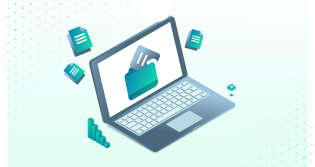
Gather Documents
Collect all financial documents, including sales receipts and transaction records, for reconciliation.
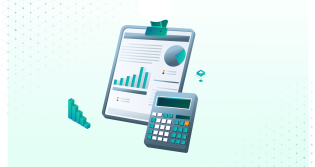
Calculate Totals
Sum up total sales from receipts and count cash in the POS terminal, ensuring amounts align.
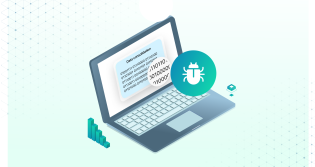
Investigate Discrepancies
Identify and investigate any discrepancies between recorded and actual cash amounts, reviewing all transactions.
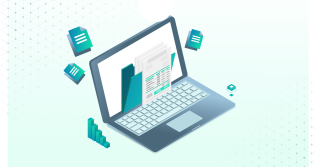
Adjust Records
Correct records to reflect accurate amounts, adjusting for any identified discrepancies.
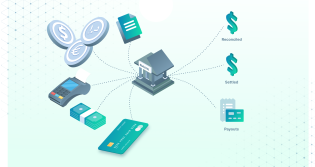
Document Reconciliation
Create a detailed reconciliation report outlining cash balances, adjustments, and unreconciled transactions.
Your back-office on cloud
One Platform. Endless Solutions
We optimize the manual processes needed to keep your finance and payment back-office running smoothly enabling teams to be more agile, innovative & productive.


Redefining Data Preparation In A Better Way
A fresh approach to data gathering, normalizing, and transforming operational data quickly and effortlessly, without coding even in highly regulated and controlled environments.


Frequently Asked Questions For Cash Reconciliation
What is Cash Reconciliation?
Cash reconciliation is the process of comparing and matching cash transactions recorded in financial systems with actual cash on hand to ensure accuracy in financial reporting and maintain accurate cash flow records.
Why is Cash Reconciliation Important?
Cash reconciliation is crucial for detecting discrepancies, preventing fraud, ensuring accurate financial reporting, maintaining cash flow integrity, and ensuring that all cash transactions are properly recorded and accounted for.
How do you reconcile cash in accounting?
To reconcile cash in accounting, compare the cash balance in your records with the bank statement. Identify and adjust for any discrepancies, such as outstanding checks, deposits in transit, or bank fees. Ensure all transactions are recorded accurately. Finally, update your records to match the corrected balance, ensuring consistency between your books and the bank statement.
What are the steps in cash reconciliation?
Cash reconciliation involves matching cash balances in records with actual cash on hand. First, compare the cash register totals with recorded sales. Then, verify all cash receipts and deposits against bank statements. Next, account for petty cash transactions and any withdrawals. Finally, investigate discrepancies, document findings, and adjust the records to reflect accurate balances.
What is the objective of cash reconciliation?
The objective of cash reconciliation is to ensure that the cash balance recorded in a company's financial records matches the actual cash on hand. This process identifies discrepancies, prevents fraud, and maintains accurate financial reporting. Regular reconciliation helps in detecting errors, ensuring financial integrity, and providing a clear picture of cash flow for effective decision-making.
What is the purpose of daily cash reconciliation?
Daily cash reconciliation ensures that the cash on hand matches the recorded transactions, identifying discrepancies early. This process helps in detecting errors, preventing fraud, and maintaining accurate financial records. By regularly reconciling cash, businesses can ensure financial integrity, support better decision-making, and meet compliance requirements, ultimately contributing to the organization's financial health and stability.
How Does Optimus Address Security Concerns in Cash Reconciliation?
Optimus prioritizes security by implementing advanced encryption, secure data transmission practices, and regular security audits to safeguard sensitive cash transaction data and prevent unauthorized access.
Does Cash Reconciliation Software Handle High Transaction Volumes?
Optimus' cash reconciliation software is equipped to handle high transaction volumes efficiently, utilizing automation and robust data processing to ensure accurate and timely reconciliation
Can Cash Reconciliation Software Manage Multiple Cash Accounts?
Yes, Optimus' cash reconciliation software supports multiple cash accounts, allowing for efficient management and reconciliation of various cash sources and balances within an organization.

You can reach us at:

1700 Montgomery St, San Francisco, California 94111
6470 E Johns Crossing Suite 160, Johns Creek, GA 30097
Copyright © 2026 Optimus. All Rights Reserved.

