




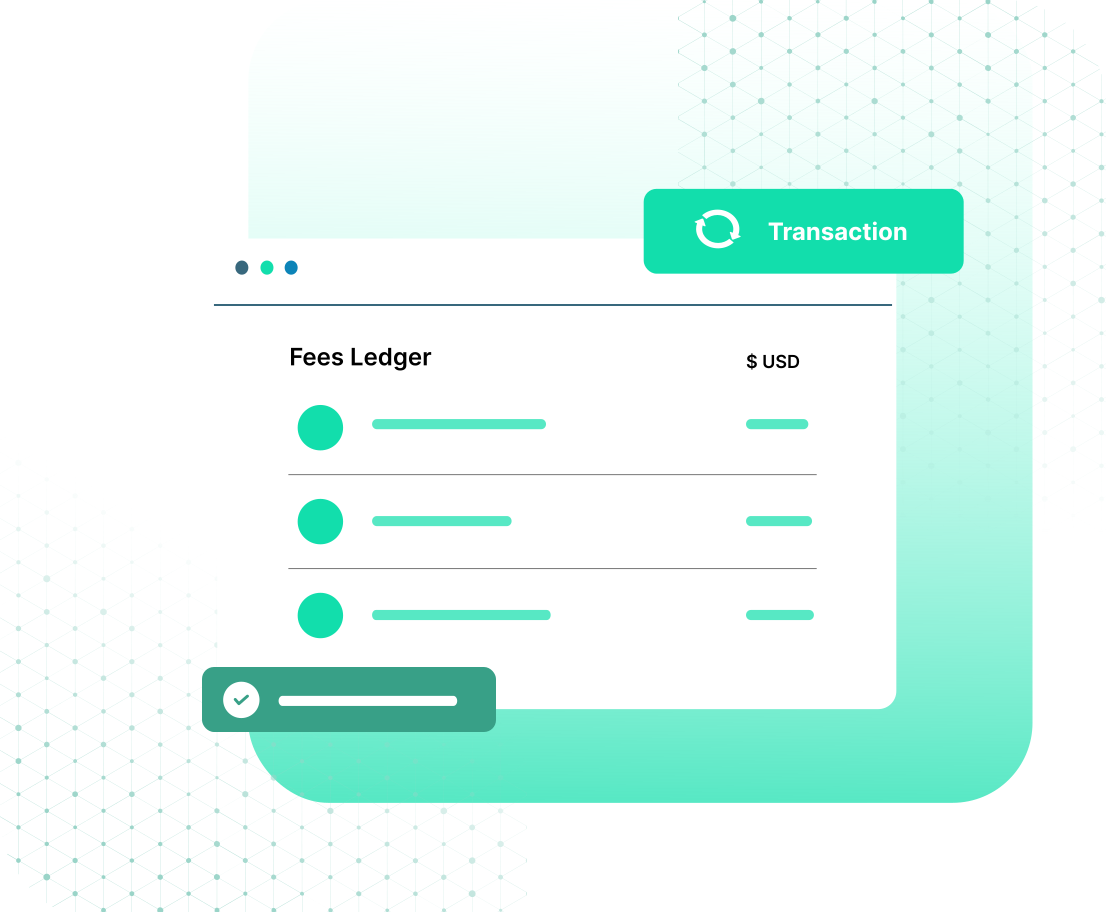
Validate Every Fee at a Transaction Level
Don’t just see what you were charged! Verify that every fee, commission, and interchange rate is correctly applied.

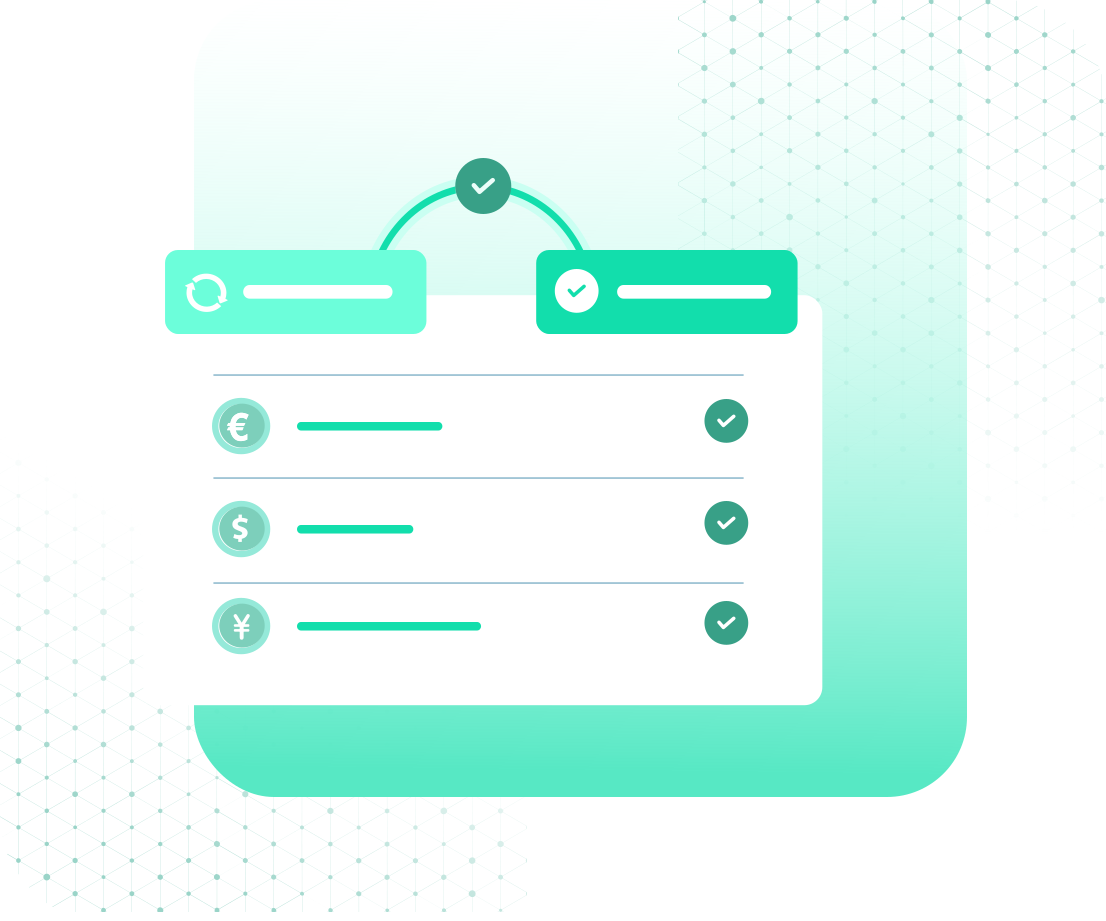
Automatically Detect Overcharges and Anomalies
Surface duplicate charges, incorrect pricing tiers, and unexpected fees across all payment partners.

Go Beyond Effective Rate to True Cost Accuracy
Effective rate averages can hide discrepancies. Optimus' Cost Intelligence Agent identifies exact mismatches and overcharges at the transaction level.

Key Features
- Predict per-transaction card network fees (Visa/Mastercard) with daily updates.
- Enhance transactional data by incorporating calculated per-transaction fees.

Results
- Achieve near 100% accuracy in fee predictions.
- Enable faster, data-driven decision-making.
- Improve processing quality and payment service efficiency.

Growth-Driven Automation
Simplify the setup and management of complex fee structures without code, driving profits through automated, efficient processes.

Achieve Complete Fee Accuracy at Scale
Move beyond averages and estimates. Gain confidence that every fee across geographies, payment methods, and partners, is correctly applied and verified.

Reduce Manual Effort and Operational Overhead
Eliminate time-consuming spreadsheet work and manual audits. Automate reconciliation, validation, and reporting, freeing your finance team to focus on strategic priorities.

Continuously Monitor and Prevent Revenue Leakage
Don’t just detect issues after the fact. Continuously track fee behavior and surface anomalies early to prevent ongoing financial leakage.

Turn Payment Costs Into Measurable Financial Gains
Optimus doesn’t just help you understand your payment fees. It ensures they are accurate, controlled, and optimized for maximum financial impact.

Eliminate Overcharges Across Processors
Stop losing money to incorrect fee applications, hidden charges, and pricing mismatches. Optimus validates every transaction to ensure you only pay what you should.


Reduce Chargebacks Smartly
A streamlined approach to identifying, analyzing, and resolving chargebacks efficiently, reducing disputes and financial losses without additional complexity.

Detect and analyze chargeback trends effortlessly

Resolve disputes faster with automated workflows

Minimize revenue leakage through proactive insights

Maintain compliance with network and processor guidelines
All this without the need for manual intervention.

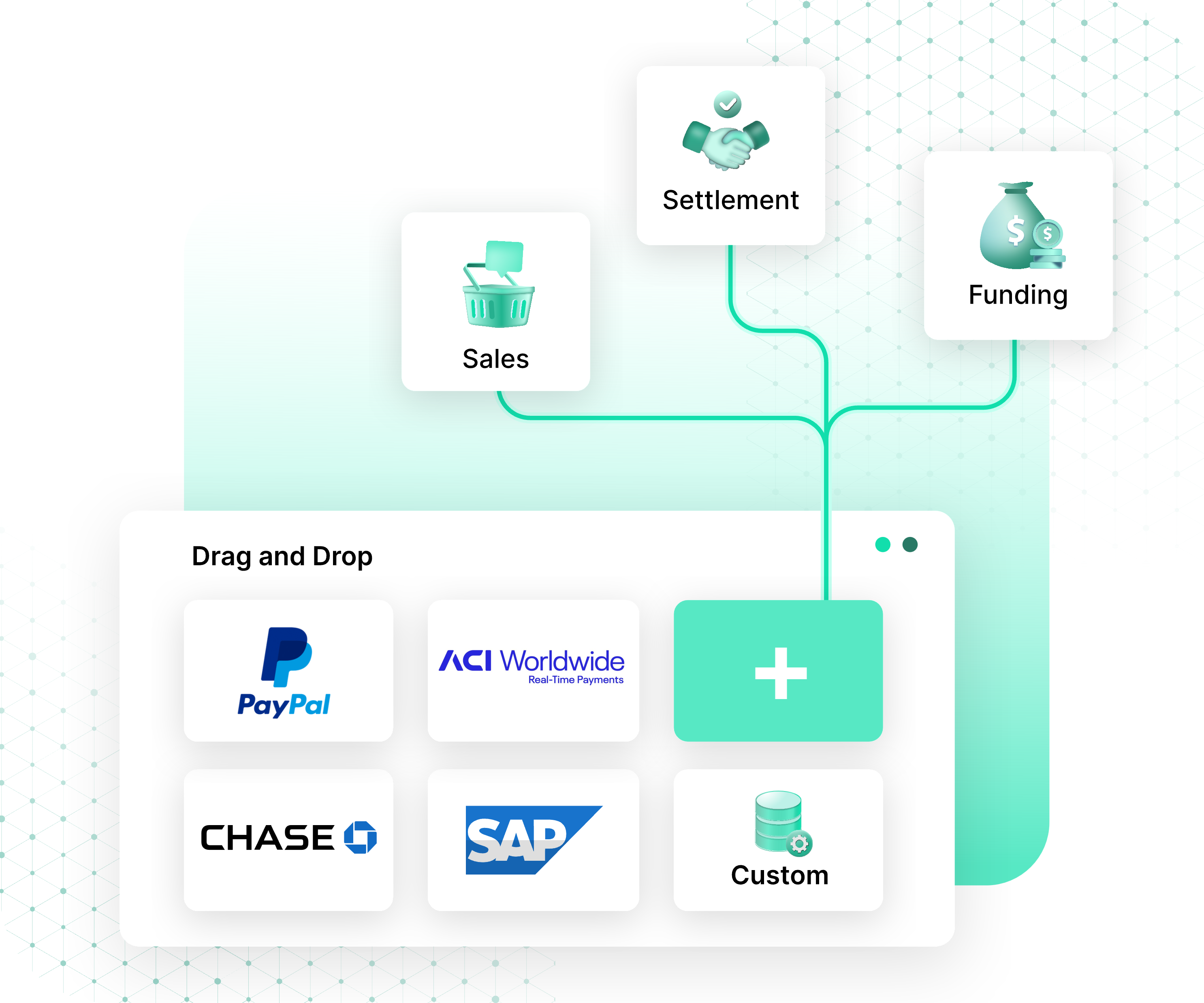
Setup fees & commissions rules
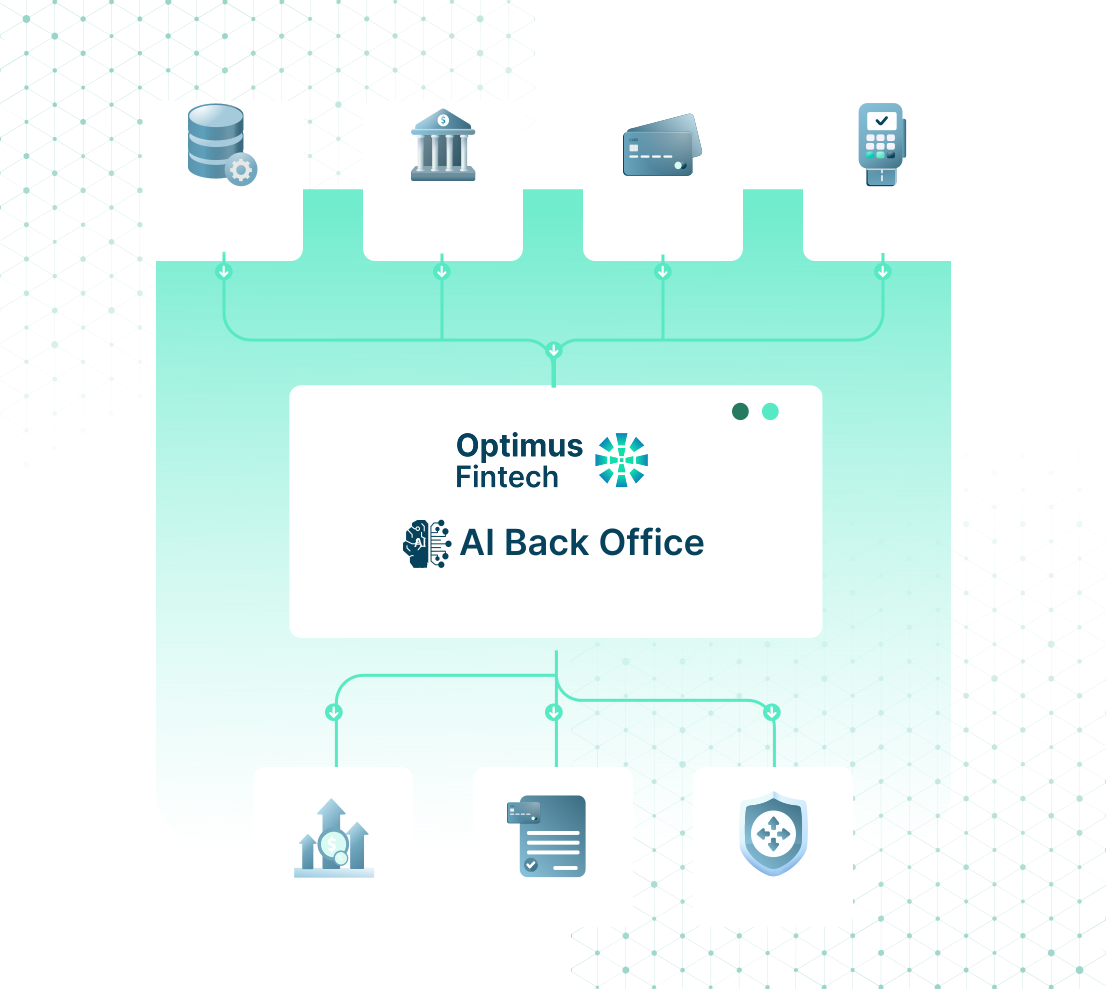
Define Fee structure and plans across data from third-party processors, payment service providers, independent service organizations, merchant service providers, peer to peer networks, acquiring banks, and issuing banks.

Auto compute at source
Compute Fees and commissions across multiple payment flows all at once covering Posting, Settlement, and Funding Data.

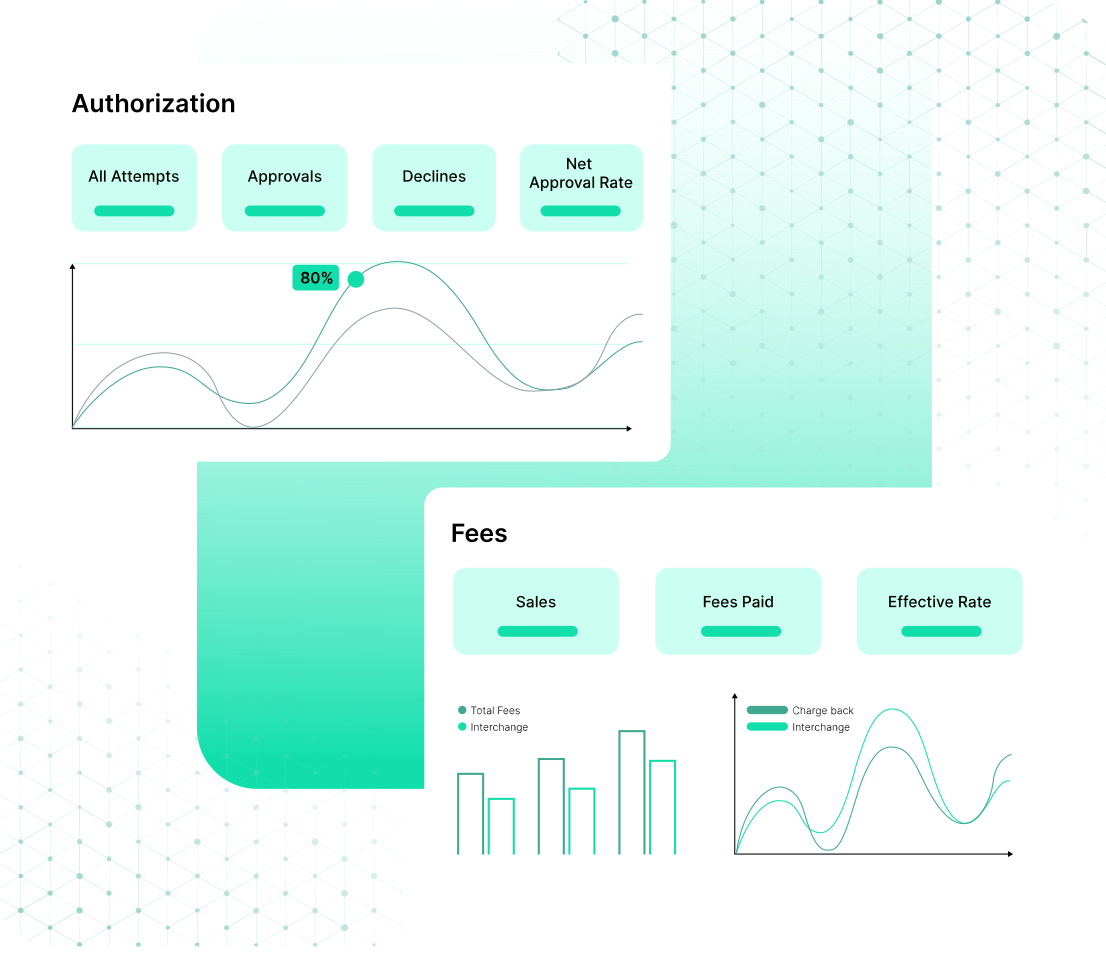
Unlock insights
Track sales, fees, commissions, and effective rates across all levels of your business. See both big-picture sales and fee trends, and dive deep into individual transactions. Get customizable dashboards and reports tailored to different partners and channels, enabling data-driven decisions and effective partner incentives.
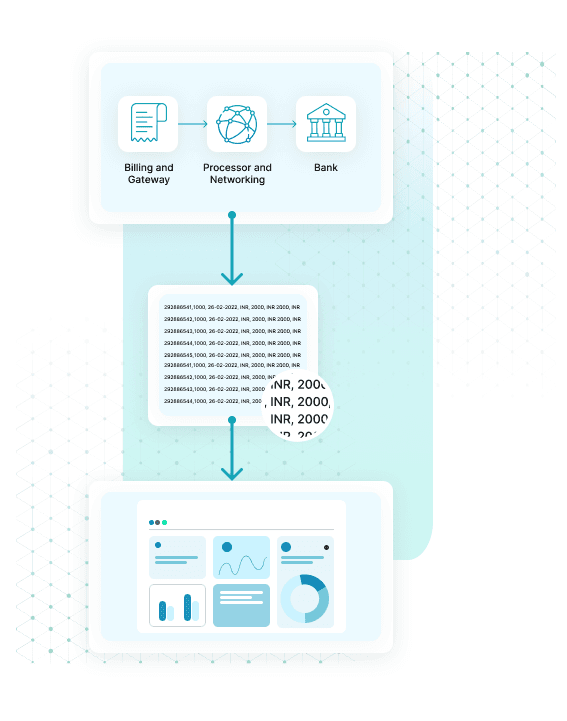

Accurately Predict and Reconcile Card Network Fees
Gain full transparency and control over Visa and Mastercard fees to optimize financial operations.

Implement Profit-Based Pricing Models
Ensure 100% cost allocation to customers while strategically sharing a portion of interchange revenue.

Deliver Value-Added Data Services
Enhance customer offerings with data-driven insights for precise card-level profitability analysis.

Frequently Asked Questions For Fees Commissions
What data sources are used for fee reconciliation?
Fee reconciliation typically utilizes data sources such as transaction records, billing statements, accounting systems, bank statements, and customer payment histories. These sources help ensure accurate matching of fees charged, payments received, and outstanding balances for effective financial management.
What types of fees can the Optimus platform manage?
The Optimus platform can manage various fees, including transaction fees, service fees, subscription fees, management fees, processing fees, and late payment fees, providing a comprehensive solution for businesses to streamline their financial operations and enhance revenue management efficiently.
How does Optimus ensure accurate fee calculations?
Optimus ensures accurate fee calculations by utilizing advanced algorithms that analyze transaction data and apply customizable fee structures. Regular audits and real-time monitoring of transactions further enhance accuracy, ensuring clients receive transparent and precise billing for all services rendered.
Can I customize fee structures for different transactions?
Yes, you can customize fee structures for different transactions by setting specific rates based on transaction types, customer categories, or transaction volumes. This flexibility allows you to align fees with your business model, enhancing profitability and customer satisfaction.
What reporting features does Optimus offer for fee management?
Optimus provides comprehensive reporting features for fee management, including customizable reports on fee structures, collection metrics, and client payment histories. Users can analyze financial trends, monitor outstanding fees, and generate insights to enhance decision-making and optimize revenue management effectively.
How does the Optimus Fintech platform handle disputes related to fees?
The Optimus Fintech platform addresses fee-related disputes by implementing a structured resolution process. Users can submit disputes through a designated channel, where they are reviewed by the support team, ensuring timely communication and resolution in line with company policies.
Is it possible to automate fee reconciliation with Optimus?
Yes, automating fee reconciliation with Optimus is possible. The platform offers tools that streamline data integration, enhance accuracy, and provide real-time reporting, enabling businesses to efficiently manage fee structures and reduce manual intervention, ultimately saving time and resources.
What support does Optimus provide for integrating fee management with other systems?
Optimus offers comprehensive support for integrating fee management with various systems, including APIs, custom connectors, and data migration tools. Their expertise ensures seamless synchronization of fee data across platforms, enhancing operational efficiency and improving overall financial management processes.
What is fee reconciliation?
Fee reconciliation is the process of verifying and aligning financial fees between a business and its partners or service providers. It ensures that the fees charged match the agreed terms, identifying discrepancies and correcting them. This process helps maintain accurate financial records and prevent overcharging or undercharging.
How do you account for rebates in accounting?
Rebates are recorded as reductions in revenue or expenses. When received, they reduce the cost of goods sold or operating expenses, affecting net income. For accrual accounting, rebates are recorded as receivables until received. Adjustments ensure accurate financial reporting reflecting the rebate's impact on financial statements.
What is rebate reconciliation?
Rebate reconciliation involves verifying and matching rebate claims with the corresponding transactions and records. This process ensures that the rebates are correctly applied, accurate, and compliant with agreements. It typically includes reviewing documentation, validating amounts, and adjusting accounts to reflect the correct rebate values.
How do commission fees work for financial reconciliation process?
Commission fees for financial reconciliation are charges assessed for processing and verifying transactions. These fees typically cover the cost of matching records, identifying discrepancies, and ensuring accuracy. They may be a flat rate or a percentage of the transaction volume, depending on the service provider's pricing model.
What Support Options Are Available for Fees & Commissions Software?
Optimus offers various support options, including technical assistance, user training, and comprehensive documentation, to ensure you get the most out of our fees and commissions software and resolve any issues efficiently.
How Does Fees & Commissions Software Improve Revenue Management?
Optimus' software improves revenue management by providing accurate calculations, detailed reports, and insights into fee structures and commission performance, helping you optimize revenue streams and manage financial performance effectively.
Can I Track Historical Fees and Commissions Data?
Yes, our software allows you to track and analyze historical data on fees and commissions, providing insights into trends and performance over time for better strategic planning and analysis.

You can reach us at:

1700 Montgomery St, San Francisco, California 94111
6470 E Johns Crossing Suite 160, Johns Creek, GA 30097
Copyright © 2026 Optimus. All Rights Reserved.

