Recon Agent
Reconciliation starts with trusted financial data.
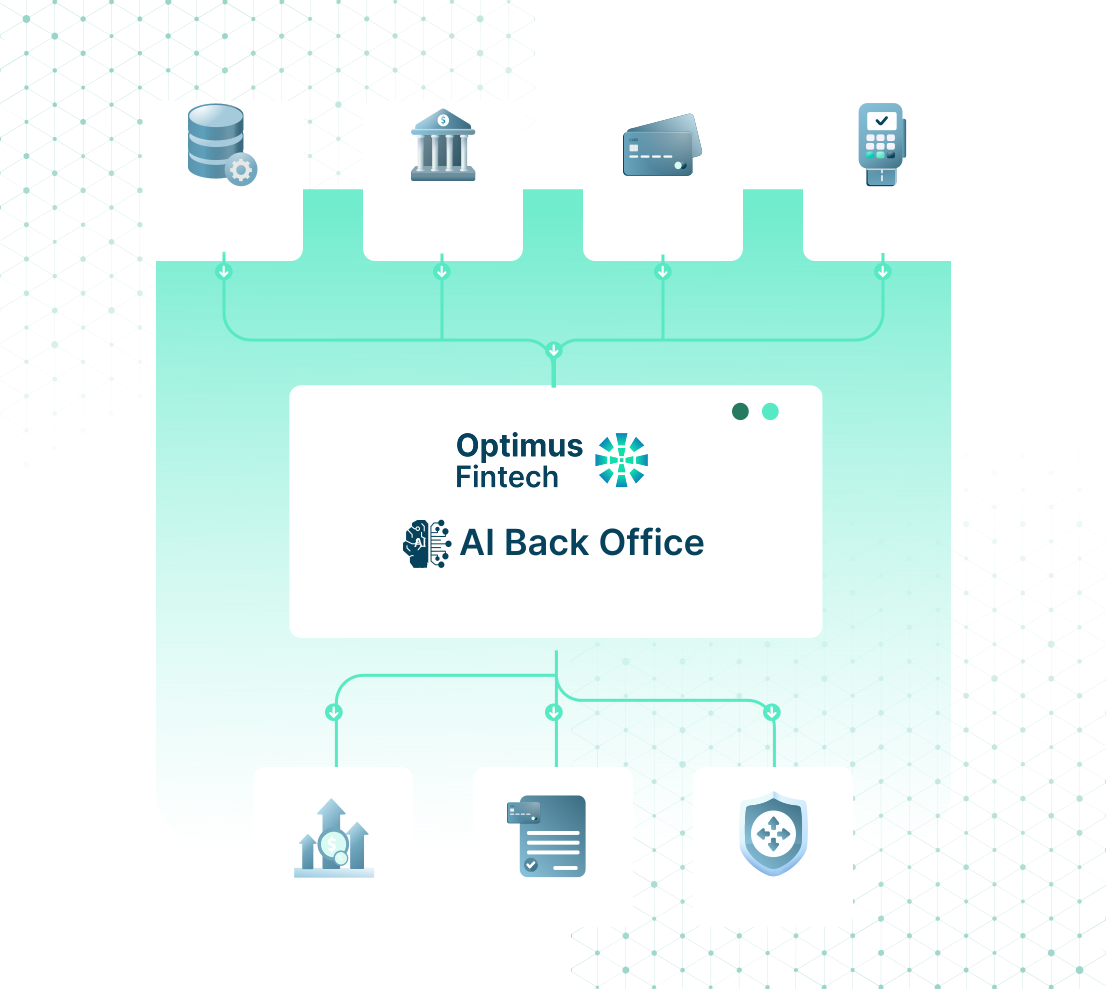
Optimus Recon Agents continuously connect, standardize and validate data across processors, banks, ERPs and operational systems - then reconcile it at scale and resolve exceptions autonomously, so Finance works with close-ready data instead of fragmented source files.

576M+ Transactions Per Day

Improve Settlement TAT by 100x





Start with trusted inputs
Standardized and validated data reduces false exceptions.

Reconcile continuously
Don't wait until month-end to discover breaks.

Resolve what matters
Surface meaningful financial exceptions instead of data-format problems.

Create close-ready datasets
Turn reconciled transactions into a reliable foundation for financial close.

Reduce Chargebacks
Eliminate the guesswork out of chargeback management with powerful ML-based models for ticketing, deep-dive analyses and improving overall win rates.

Eliminate Write offs
Automatically detect and resolve revenue leakages before they turn into monthly, quarterly, or annual write-offs.

Resolve Exceptions Faster
Quickly find missing payments, assess impact from issues, and resolve customers questions before they turn into chargebacks.

Improve Team Productivity
Reduce the time spent on your reconciliations by at least 75% with automated payment reconciliation software. Swap spreadsheets for end-to-end automation and give your people more time to focus on what matters most.

Ensure Audit Readiness
Tailored regulatory solutions designed to achieve compliance and streamline reporting processes.

Improve Operational Efficiency
Proven cost reduction for existing operations and lower investment as operations scale.


Branch-Wide Synchronization: Reconcile transactions across branches for cohesive reporting.

Automated Exception Management: Detects and resolves mismatches promptly for consistent financial integrity.

Configurable Matching Rules: Streamline reconciliation with custom matching rules that reduce manual efforts. Optimus ensures precision and scalability in bank reconciliation, adapting to complex transaction needs.
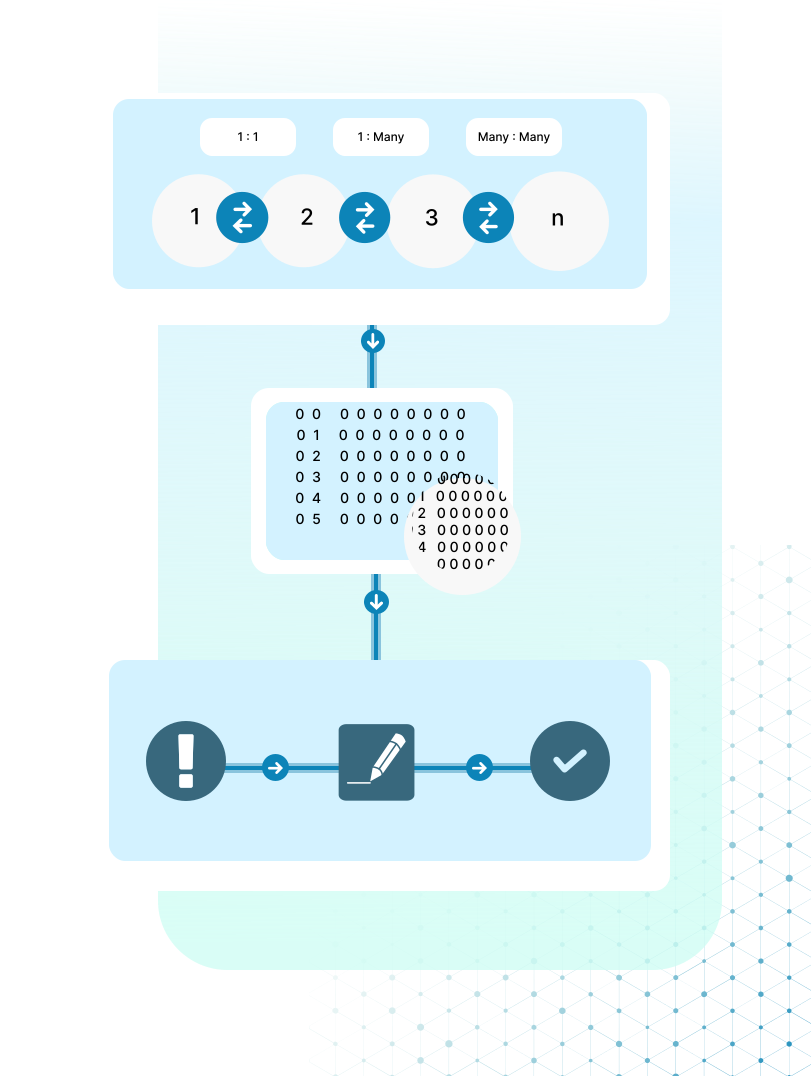
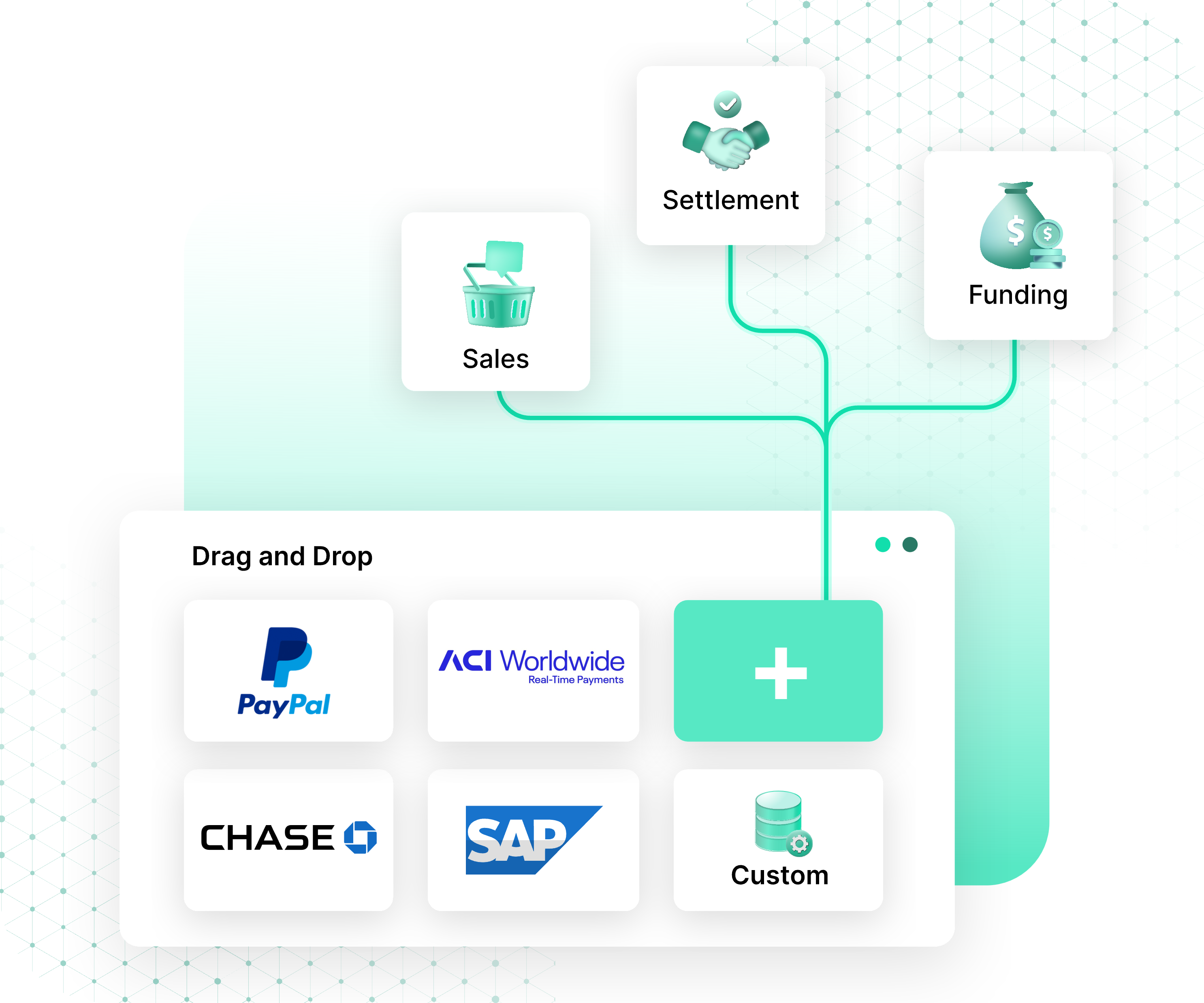
1. Connect Data Sources
Connect payment gateways, banks, PSPs, ERP systems, billing platforms, and internal ledgers to create a unified N-way reconciliation workflow. Automatically ingest transaction data through APIs, SFTP, or secure file uploads for seamless reconciliation.

2. Intelligent Transaction Matching
Automatically match and reconcile transactions using configurable business rules and AI-powered matching. Validate payment records across multiple systems to improve reconciliation accuracy and eliminate manual effort.

3. Automated Exception Management
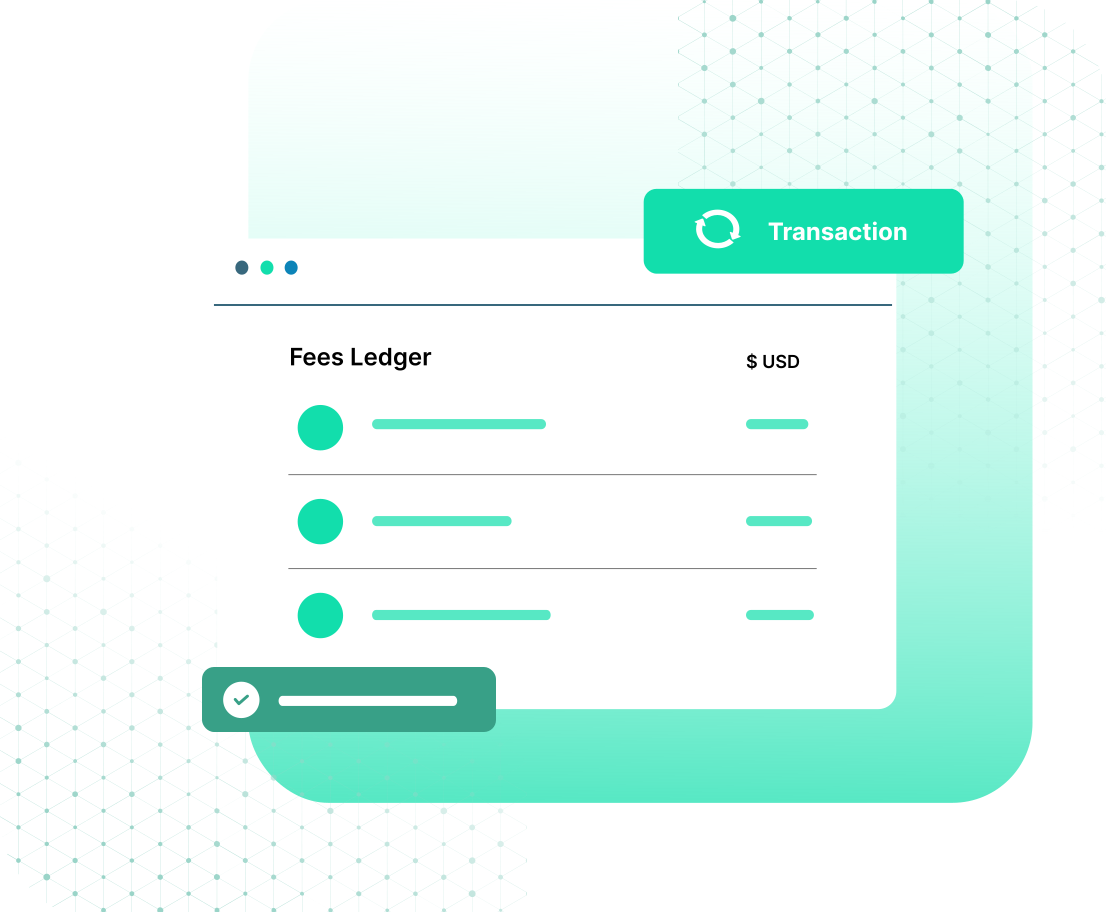
Detect unmatched transactions, missing settlements, fee discrepancies, and reconciliation breaks automatically. Route exceptions to the appropriate teams through configurable workflows for faster investigation and resolution.

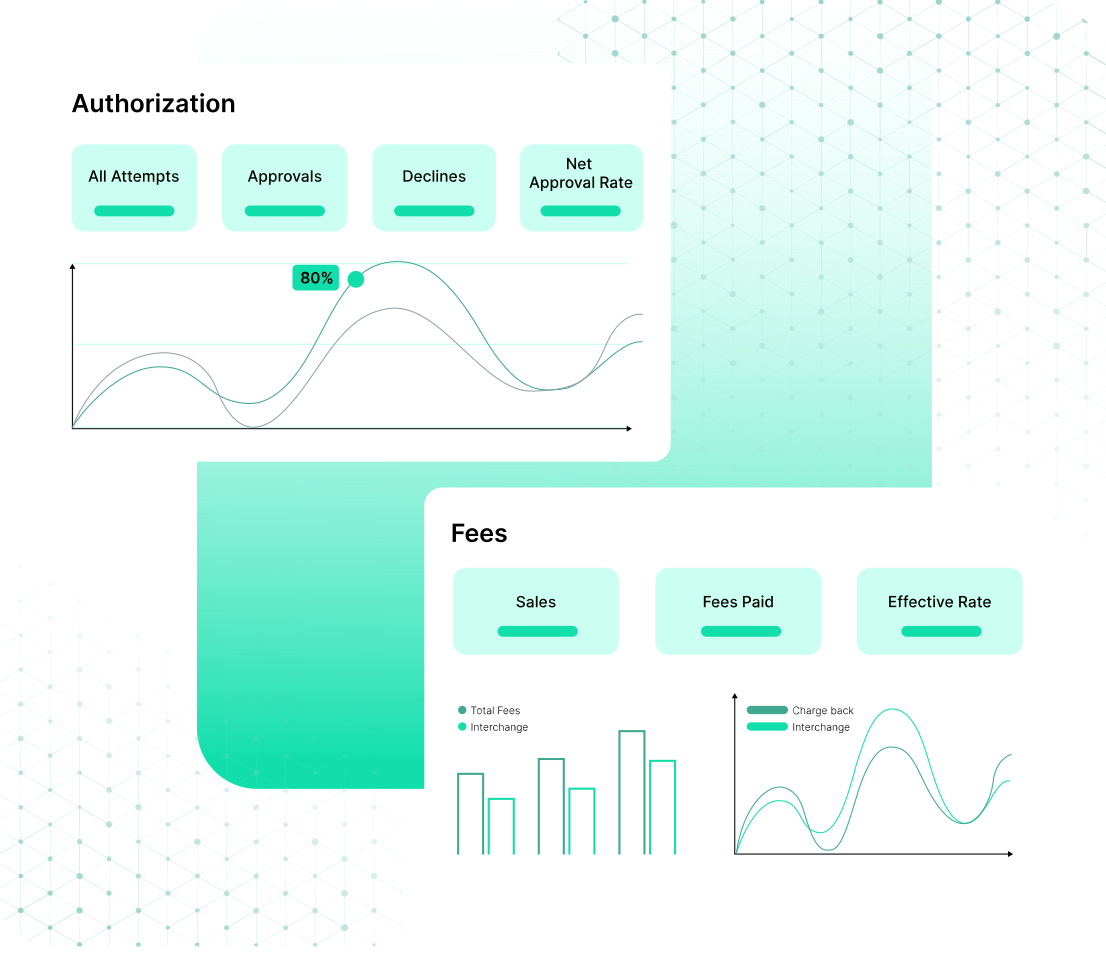
4. Reporting & Operational Insights
Monitor reconciliation status, settlement trends, unmatched transactions, and operational KPIs through real-time dashboards and scheduled reports. Gain complete visibility into reconciliation performance while supporting audit readiness and informed decision-making.
Why Choose Optimus for Autonomous Payment Reconciliation Operations
Modern payment operations require more than automated matching. Optimus delivers autonomous payment reconciliation operations with AI-powered workflows that investigate exceptions, retrieve data across connected systems, enrich transaction records, and orchestrate corrective actions. The result is faster reconciliation, reduced manual effort, stronger financial controls, and greater operational efficiency.

From Spreadsheets to Intelligent Automation
Move beyond spreadsheet-based processes with an AI-powered reconciliation platform built for scale. Where manual transaction matching leaves room for error, Optimus applies intelligent transaction matching to reconcile records accurately and consistently, significantly improving reconciliation accuracy across every payment source.

From Reactive Firefighting to Automated Resolution
Time-consuming exception handling slows finance teams down and delays financial close. Optimus replaces manual follow-ups and investigations with automated exception management and workflow-driven case management, routing discrepancies to the right teams and resolving them faster, so reconciliation and financial close happen on schedule instead of at the end of a long manual chase.

From Blind Spots to Complete Financial Visibility
Limited visibility into reconciliation status makes it difficult to trust your numbers or your audit trail. Optimus delivers real-time dashboards and reporting alongside complete audit trails and compliance support, giving finance teams the visibility they need to close books with confidence and stay audit-ready year-round.

Built to Scale, Built to Save
Growing transaction volumes shouldn't mean growing headcount. While manual processes struggle to scale, Optimus scales effortlessly with increasing payment volumes, reducing reconciliation costs through automation and freeing finance teams to focus on higher-value work instead of higher operational costs.

Frequently Asked Questions For Payment Reconciliation For Financial Accuracy
How do you reconcile financial data or statements?
Reconciling financial data involves comparing two sets of records to ensure they align. It entails identifying discrepancies and resolving them, ensuring accuracy and consistency across all financial statements and documents.
What are the steps in the financial reconciliation process?
Financial reconciliation typically involves comparing financial records to ensure accuracy. Steps include gathering statements, identifying discrepancies, investigating causes, adjusting records, and documenting findings to ensure financial integrity and compliance.
What is the financial reconciliation process?
Financial reconciliation is the process of comparing financial records to ensure accuracy and consistency. It involves matching transactions between different accounts or systems, identifying discrepancies, and resolving them to achieve balance and integrity in financial reporting.
What is payment reconciliation in accounts payable?
Payment reconciliation in accounts payable is the process of cross-verifying financial records to ensure that payments made by a company match the invoices issued by vendors. It aims to identify discrepancies and rectify them for accurate financial reporting.
What are the challenges of payment reconciliation?
Payment reconciliation faces challenges such as matching vast transaction volumes accurately, resolving discrepancies, dealing with incomplete data, managing multiple payment methods, and ensuring compliance with regulatory requirements, all of which demand meticulous attention and efficient processes.
What are the Benefits of Financial Reconciliation?
Financial reconciliation offers several benefits, including ensuring accuracy in financial records, detecting errors or fraud, improving transparency, aiding in decision-making, and ensuring compliance with regulations and standards. It also enhances trust among stakeholders.
When do we need to perform the Financial Reconciliation process?
Financial reconciliation is essential when discrepancies arise between recorded financial transactions and actual account balances. It's typically conducted regularly, ensuring accuracy, detecting errors, and maintaining financial integrity for informed decision-making and regulatory compliance.
Why Optimus Fintech for the Financial Reconciliation process?
Optimus Fintech stands out for financial reconciliation due to its advanced automation, accuracy, and efficiency. Its robust platform streamlines complex reconciliation tasks, reducing errors and saving valuable time for financial teams.

You can reach us at:

1700 Montgomery St, San Francisco, California 94111
6470 E Johns Crossing Suite 160, Johns Creek, GA 30097
Copyright © 2026 Optimus. All Rights Reserved.

